Oil Prices Surge Past $90 as Middle East Tensions Rise, Triggering Global Market Jitters

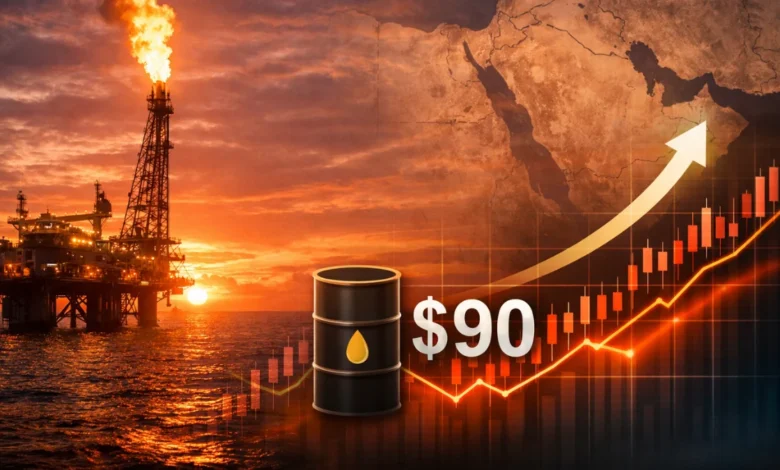
Global energy markets were shaken on Friday after oil prices surged above $90 per barrel, fueled by escalating geopolitical tensions in the Middle East and unexpected production cuts from key oil producers. The sharp rise in prices has triggered concerns about a potential energy shock that could ripple through global economies already struggling with inflation and slowing growth.
Brent crude, the international benchmark for oil prices, climbed to its highest level in nearly two years as traders reacted to supply disruptions and rising fears of instability in the Gulf region. Analysts say the sudden spike reflects a mix of geopolitical risk and tightening global supply.
The latest jump came after Kuwait announced it would begin cutting oil production due to limited storage capacity. At the same time, escalating tensions involving Iran have raised fears that shipping routes in the Strait of Hormuz — one of the world’s most important oil transit chokepoints — could be disrupted.
If the situation worsens, energy analysts warn that global oil prices could climb even higher. Some experts suggest prices might surge toward $150 per barrel if exports from the Gulf region are interrupted for an extended period. Such a scenario would likely trigger fuel price spikes worldwide and intensify inflationary pressures on consumers.
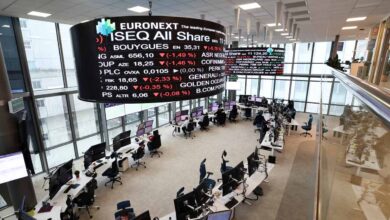
Financial markets reacted swiftly to the news. Major stock indexes in Europe and the United States opened lower as investors weighed the risk of rising energy costs and slowing economic activity. London’s FTSE 100 index suffered its steepest weekly drop in nearly a year, while U.S. markets also slipped amid growing uncertainty.
Adding to the anxiety was a surprising economic report from the United States showing that the country lost around 92,000 jobs in February — one of the weakest labor market performances in months. Economists say the combination of rising oil prices and weakening job growth could increase the risk of stagflation, a troubling economic scenario where inflation rises while growth slows.
Central banks are now facing a complicated situation. The U.S. Federal Reserve and the Bank of England had been expected to begin cutting interest rates later this year as inflation cooled. However, the sudden jump in energy prices could force policymakers to delay those plans, since higher fuel costs tend to push inflation higher again.
Beyond financial markets, the impact of rising oil prices could soon be felt by consumers. Petrol and diesel prices in several countries have already started climbing, with energy companies warning that further increases may be unavoidable if crude prices remain elevated. Transport costs, airline ticket prices, and manufacturing expenses could also rise in the coming weeks.
The situation is particularly sensitive for developing economies that rely heavily on imported fuel. Higher oil prices can quickly widen trade deficits and strain government budgets that subsidize energy costs. Countries across Asia and Africa are expected to closely monitor the developments in the Middle East as they plan their economic strategies for the year ahead.
Meanwhile, energy experts say the current crisis highlights the world’s continued dependence on fossil fuels and the fragile nature of global supply chains. Despite rapid investments in renewable energy, oil still powers a large share of transportation, industry, and electricity production worldwide.
For now, investors and policymakers are watching two key factors: whether the geopolitical tensions escalate further and how long production cuts will remain in place. Both could determine whether the current surge in oil prices becomes a temporary spike — or the beginning of a broader global energy crisis.
As uncertainty continues to grow, one thing is clear: the world’s energy markets are entering a volatile phase, and the economic consequences could be felt far beyond the oil fields of the Middle East.